

(Editor's note: This is just one part of a series of stories about local candidates in the upcoming June 2 primary, municipal and school board election. Find more coverage here.)
Simplified: Six people are looking to fill three open seats on the board overseeing South Dakota's largest school district. Here's a closer look at the candidates.
Why it matters
- The Sioux Falls School District has about 24,000 students, and it's one of the largest employers in the city. That means the school board overseeing the district – including a more than $300 million budget – has a big impact on the entire city.
- The five-member board has three open seats, meaning if a majority of the board changes, so, too, could the trajectory of public schools in the city. Or, if the three incumbents earn re-election, the district can maintain status quo in the direction it's already headed.
- This guide aims to make it easy to feel smart about how the candidates feel on a wide variety of relevant policy issues. Sioux Falls Simplified sat down with all six candidates and asked the same slate of questions.
First, let's meet the candidates
Candidates are listed in alphabetical order.
Jean Childs

Childs, 79, is a retired teacher who spent 16 years teaching in California, including 14 in the prison system helping folks get GEDs.
She said she's running to serve, to make a difference in the school district, to help bring the budget "under control" and "to return to fundamental reading, writing arithmetic, cursive and true constitutional U.S. history."
Dawn Marie Johnson

Johnson, 36, works as an independent contractor serving nonprofits in social work.
She said her first three years on the board went by so fast, she feels like she's just getting started. She also has children still in Sioux Falls schools, and said that gives her a "deep investment" into the district.
Marc Murren

Murren, 70, is a retired teacher and coach who spent more than 40 years in the district. He's also a current school board member seeking to keep is seat.
"I believe what we’re doing is good work, and I like good work," Murren said on his decision to run again. "I want to improve and work more on what we’re trying to do: educate kids."
Michael Stangeland, Jr.

Stangeland, 39, holds a number of jobs, including as a caretaker for his grandmother, working in retail, working as a writer and serving as a precinct committeeman.
He said he wanted to run for school board after being involved in an effort to refer the most recent property tax opt out to voters (an effort that ultimately wasn't successful).
"And so my thought was, you know, are we getting to the point where property taxes could be a central issue that someone runs on for school board," Stangeland said. "And shortly after I thought, well, if that is a case, maybe I should consider doing it myself."
Gail Swenson
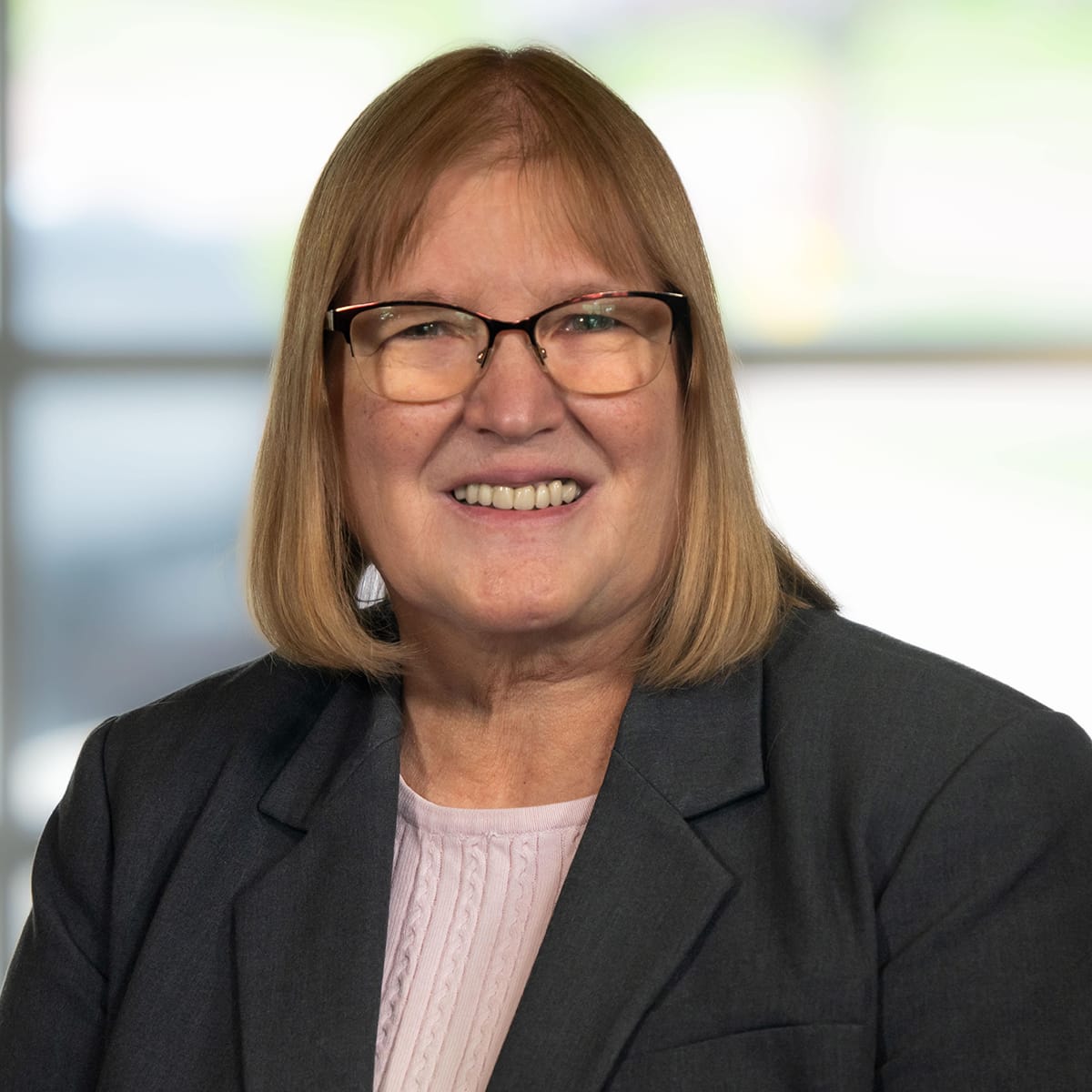
Swenson has spent her entire career in education, both in administration and as a high school speech teacher. She worked with the Sioux Falls School District from 1991 until her she left in 2014 to be superintendent in a different district.
She's seeking re-election because she still has work to do – especially when it comes to navigating financial challenges within the district.
"I'm running because of the challenges we're facing with school budgets," she said. "I'm hoping that we continue our excellence with opportunities and classes for kids and that we take good care of our staff."
Stuart Willett

Willett, 67, is a retired teacher. He previously ran for school board in 2024, and his reasons for doing so again this year are the same: addressing the budget, and addressing concerns about artificial intelligence.
"I'd say today, both of those issues are crisis mode," Willett said. "The school budget's risen 22% since 2019. The number of students enrolled has decreased. and the school district has not passed the legislative performance review. They failed on every single measure. So it's like, what are we getting for this money?"
Now, let's get into some policy topics
Here's how the candidates answered the following questions. Each question rotates which candidate's response is featured first to keep it as fair as possible:
Let's start with a fun one – which mascot in the Sioux Falls School District is your personal favorite and why?
Childs first asked if I could name the mascots for her, saying "Jackrabbits isn't my favorite, but that's the only one I can think of right now." She ultimately settled on the Lincoln Patriots.
Johnson said first of all, she shouldn't have a favorite, but if she had to choose, it'd be the the Marcella LeBeau Elementary Bears is her favorite because of her connection to the school because she was on the board when it was constructed and opened.
"My name is gonna be on that forever – my daughter's name is on one of the beams," she said.
Murren said even though he himself graduated from Lincoln High School, he'd pick the Washington Warriors because he spent 30+ years coaching them.
Stangeland said he doesn't have a favorite.
"Part of it is that – and I recognize the value of sports, especially for a lot of people – but I am not generally a sports person," he said.
Swenson said her favorite is the Roosevelt Rough Riders.
"I'm a Rough Rider, through and through."
Willett said his favorite is the Washington Warriors.
"You remember that whole big debate about the Washington Redskins, and they became the Washington Commanders?" Willett said. "And I thought, what a lousy name for a football team. But Warriors – that's a good name. I mean, I wanted to go up against Warriors. I don't want to go up against the Commanders."
Let's talk about the budget. The district has been in a season of belt-tightening as state funding has come up short in recent years. What are your priorities when it comes to crafting a budget? And how would you approach future needs for cuts?

Johnson said her priority will be keeping class-sizes small.
"I think that's going to be our north star for the upcoming years, especially as our growing population of behavioral needs, SPED (special education) needs – keeping class sizes low is going to be crucial," Johnson said.
Murren said the one thing he won't compromise on is classroom size, especially at the elementary level. He also said the district would find ways to continue to cut if needed, but that the district has been put in a "tough spot."
"I know one way we can fix it: if the state followed state law," Murren said, referring to the state legislature falling short of the required increase in funding to public education mandated by state law.
 Megan Raposa
Stangeland said he's an advocate for "base zero budgeting," i.e. starting from zero and building up a budget rather than starting with a previous year's budget and adding on.
"If it's done right, I think that you will filter out the money that doesn't actually need to go there," he said. "Because it is a very easy thing, when it's not your own money, to spend it."
Swenson said she's already encountered this on the board making $3 million in cuts for each of the last two years. Her priorities in budgeting are kids and people.
"We want to keep offering our excellent programming and taking care of all of our students, no matter what their need," Swenson said. "As a public school, we open our doors for everyone."
Willett said his approach to budgeting would be to talk to the teachers in every school, find out what they need and evaluate what the district has purchased already and how helpful or not helpful they are.
- He recalled a time when he was a teacher in New York and the district bought a bunch of furniture that teachers didn't like. Then, later, when teachers asked for money for tutoring support, they were turned down.
"I'm sure every single thing on the budget item is going to sound really good," he said. "The question is, okay, well, how effective is it?"
Childs said that the school district budget has increased 22% in the last five years, while also noting that the goal would be to cut without harming the quality of education.
- She's also committed to voting against any property tax opt outs – which would cut spending by about $11 million per year. When asked how she'd cut that much without harming the quality of education, she said:
"We just change our teaching style a little bit. I don't think it's a costly thing to teach basic fundamentals."
Do you think South Dakota’s property taxes are a problem? If so, what role should the school district play in ongoing conversations at the state and local level?
Murren said he doesn't understand why so much of the frustration over property taxes is directed at the schools when that's how they're set up to be funded in the state. State law allows districts to take opt outs at the local level, and it's a local way of deciding to support public education, he said.
"There’s all of these things that bother me about how they attack us, and a lot of it is: they just don't know," Murren said of folks in favor of cutting property taxes. "They don't know what’s going on. We don't throw away money. We try to run a very frugal budget in Sioux Falls."
Stangeland said he's pledging to vote against any property tax opt outs. He also criticized the current board's attitude that people complaining about property taxes don't understand how they work.
"I'm thinking, well, maybe instead of arrogantly talking down to the people who are complaining about it, you should instead – if it really is that important and it really is so critical – maybe you should put more effort into explaining that importance," Stangeland said.
Swenson said the school district has no choice in how it is funded. The state has decided property taxes are the way schools get funded, and that's the option available unless or until lawmakers offer another revenue source.
"I think that our role as a board is to continue to build those relationships with our legislators to continue to get them in our schools," she said, "so they can see what's going on, so that maybe they can find the money to follow the law for school funding."
Willett said he does think property taxes are a problem – pointing to a referendum effort, albeit unsuccessful, on the most recent opt out as evidence. He also pointed to concerns about the district having an increase in staff who aren't in the classroom, but instead "pushing paper."
- He pledges to vote no on any opt outs.
"People always think the problem is we need more money," Willett said. "And I've always found the problem is you're wasting money on stuff you don't need."
Childs again noted that the district should stop taking opt outs.
"I need to do a lot of studying to go over it, work with (fellow candidate) Stuart (Willett) a lot on it because that’s his expertise – work with him on it and study it a lot," she said. "But we ned to rein in our budget. I think there’s a lot of waste. I don't know exactly what that is yet, but I know teacher in-services are one example."
Johnson said she feels schools are unfairly targeted in statewide property tax discussions – particularly when you look at wage growth for teachers compared to wage growth for state employees.
- She encourages people to consider the local situation and the fact that the Sioux Falls School District property taxes are lower than nearly every surrounding district.
"I need to be able to educate people, but I think we're grossly misrepresenting where our (property tax) money is actually going, and schools are taking the brunt of it right now," she said.
South Dakota’s state lawmakers have shown some increasingly anti-public school sentiment, for lack of a better term, in recent years with a lack of funding, emphasis on voucher programs for private schools, and more. If elected, what would you do to build bridges between the district and state lawmakers?

Stangeland said he already has a few connections to state lawmakers, so he won't have to build a bridge as much.
"If there's an issue, I can just call them up," he said.
Swenson said she and her colleagues have worked hard to welcome state lawmakers into the classroom.
" I think that's our biggest role is to remind folks that we're in the squeeze, too," Swenson said. "I know you're trying to make a budget priority in the state and we have to do the same here at the district.
"So we're elected servants just like you, and we've got things to do. I've always felt that an organization's budget really speaks to their priorities and their philosophy, and I think once people understand the great things that happen in our schools, maybe they'll be more open to giving us funding."
Willett talked about his own experience in home-schooling his children and said the best way to make schools more effective is competition. He sees vouchers as a way to encourage competition.
"What are the taxpayers paying money to the school for?" Willett said. "Is it for the public school? Is it for kids to be educated? If it's for kids to be educated, then I support vouchers to go to a private school or for homeschoolers."
Childs said she'd work diligently on opening up better communication with lawmakers.
"I would include the parents, and I would get to know a few lawmakers and better communication. We need to get to know these people."
Johnson noted the district's work in inviting lawmakers into classrooms this last year to see first hand what a school day actually looks like. She also said she's grateful the school board is nonpartisan.
"So for me personally, it's a matter of showing up where maybe people that I wouldn't be in the same political (party) as would be and just try to have conversations with them and be a friendly person," Johnson said.
Murren said the district took a huge step last fall when it invited all local lawmakers to come tour schools. He said it "opened some eyes," particularly when lawmakers toured schools with high poverty rates.
"I don't think people realize how much poverty there is out there," he said.
Another topic that comes up in schools is an increase in behavioral challenges and students with medically complex needs within the district.
How do you feel the district is doing to address the needs of these kids, and what additional steps would you like to see taken, if any, to mitigate some of those challenges teachers are facing in the classroom in managing these complexities?
Swenson notes that behaviors have changed since she was a classroom teacher. She also said she's grateful for partners in the healthcare industry and that society is getting better at acknowledging mental health as healthcare. She recognizes there aren't enough services available to meet all of the needs – noting that "we've maxed out our resources here."
"If I could wave my magic wand, I would love to be able to hire therapeutic counselors and people with emotional help because I know that our great facilities in town here get overwhelmed with the number of referrals," she said.
Willett shared examples of his own experience teaching and realizing that, at times, he was misunderstanding why students were talking in class thinking they were disruptive when, in reality, they were asking to borrow a pencil. So he's learned to assume kids are there to learn.
- He wants to see the teachers who have expertise in classroom management leading professional development for other teachers and new teachers.
"I would tell you right now, 90% of the problem is probably with the attitude of the new teachers," Willett said. "You know, you ever sit in a teacher's (lounge), and they're always talking about how lazy the kids are. I'm like, look in the mirror. When I was in school, weren't you lazy?"
Childs said she's heard good feedback on the district's special education program, but, as a substitute teacher, she's also had people tell her not to sub at Axtell Park.
"So I stayed away from there," Childs said. "And then she said, no it's not bad at all – we’re really helping the students."
Johnson shared that if you take Sioux Falls special education department on its own, it'd be the fifth or sixth largest school district in the state. She also shared examples of ways she's seen teachers and support staff creatively meet the needs of kids in the classroom – particularly when each kid's needs are different.
"A specialist said, when you've met one student with autism (for example), you've met one student with autism," Johnson said. "It's not across the board – you can't flatline a program whatsoever. It's catered to every, individualized student, and that's a blessing that we have the capabilities to do that."
Murren said Sioux Falls is handling it so well people are moving to the district to take advantage of it's special education program.
"I think we do an excellent job with special education," he said.
- Murren also noted that he'd like to see more involvement from parents, as well as improvements to the state's juvenile justice system.
Stangeland:
"I have to pass on this because I don't have the familiarity. So that is something I will admit I definitely need to educate myself more on and get a better understanding before I go making, you know, empty statements about, we need to do this or need to do that."

Is this story helping you feel smarter about the 2026 election? Support Sioux Falls Simplified in bringing smarter, easier local news to our community.
One of the roles of the Sioux Falls School District is to prepare students for the “real world.” What’s your philosophy when it comes to supporting career pathways for students and supporting Sioux Falls’ future workforce?
Willett said he likes seeing students getting exposure to various jobs and trades they could work in.
"Who knows how many white collar jobs will be eliminated by AI?," Willett said. "Maybe a lot. But we're still going to have cars, and someone's got to fix them. So I'm 100% for that."
Childs:
"It starts in kindergarten. It starts with behavior. It starts with firm, fair and consistent, and that was my strength is classroom management – some people call it discipline. ... Give them the choices, and we educate them on what their choices are. And we keep our basic curriculum: history, social studies, reading, writing arithmetic, how to write an essay."
Johnson said she's impressed by a pilot program at Jefferson High School to connect kids with college and career readiness coaches. She also noted the board's role in overseeing Southeast Technical College and commended the work being done to introduce kids at even a young age to technical career options available to them.
"I think there's a growing culture, not just in Sioux Falls, but nationally supporting trade schools," Johnson said.
Murren noted the wide range of programs available in the district, including dual-credit courses and workforce-focused programs at the CTE Academy from carpentry to nursing to aviation to agriculture.
"We have kids graduating from our high schools with 33 or 34 college credits, so they basically have a year done in college," he said.
Stangeland said he was surprised to learn there's such a direct connection between Southeast Tech and the Sioux Falls School District. (Note: the school board also oversees Southeast Tech).
- He also noted that he appreciates seeing less emphasis on pushing all kids toward a four-year degree and instead showing more options for what life can look like after high school.
"It's good to have a place where you can provide a full picture, especially of these blue-collar jobs that are very respectful," he said.
Swenson:
"We have so many offerings for kids. You know, when people talk about school choice, and I think, wow, if you want school choice, look at what we offer in the Sioux Falls School District. I mean, they can do the Spanish immersion, they can do other languages, they can send their child to an A-plus arts elementary school. If you're in high school, we can send a student to the CTE Academy."
The district in recent years pivoted to a community learning center (CLC) model for after-school care. What do you think is working well in that model, and what would you work to improve upon in the future?

Childs said she doesn't know about the CLC program yet, "but I will," she said.
- She also shared her own experience as a child getting behind in math, needing a tutor and not having access to one. She said she didn't know her addition tables until age 32 when she hired a tutor. So she wants to see more after-school tutoring for kids.
- She emphasized an academic focus rather than a social one.
"I think we get hung up on all these social programs," she said. "I don't think that's the school's job. The school can't do everything. Let's do well at what we’re supposed to do, which is basically academic fundamentals step-by-step."
Johnson said in a previous career she worked in after-school programs, and seeing what the district has put together with CLC has been "really, really exciting." She's also looking forward to seeing the continued expansion of CLC programming at middle schools.
Murren said the CLC program is working, and noted that it only exists because of private donors.
"The people of Sioux Falls have been wonderful aid to us financially," he said. "I think it is a great program. ... Why not help working parents and kids?"
Stangeland said he sees value in the district providing after-school options for kids, but he doesn't know enough specifics about the CLC program to offer an answer.
"For all I know, it's doing everything right," he said. "It could be doing a lot of stuff wrong, but I would need to learn more."
Swenson said she loves that the district offers after-school programs and is grateful for the community partners who have stepped up to support the CLC programs. She's also excited at the prospect of expanding offerings in the future.
"It just shows you how responsive I think that the public schools are to the needs of our families," she said.
Willett said after-school programs and activities are a valuable source of social interaction for kids. He also shared examples of other countries he's worked in that had robust extracurricular programming for kids – including in Taiwan and England – where every kid had some sort of activity they participated in.
"That's the way the rest of the world operates," he said. "We can't just let our kids out of school at 3 o'clock and not expect trouble to happen."
The Sioux Falls School District is one of the largest employers in the city. How would you approach decision-making about teacher pay, benefits, recruitment and retention?
Johnson commended district Human Resources Director Becky Dorman for her work in recruiting teachers. She also noted the teacher pathway program in the district, where high school students can get first-hand experience in classrooms.
"I just want to support that and continue to sing their praises," she said.
Murren said he was part of the decision this year to increase teacher salaries above the rate increase provided by state lawmakers.
- He also noted the importance of improving working conditions for teachers – particularly as behaviors in the classroom get more severe.
"It's very stressful trying to mange classroom when you're spending 90% of your time on one kid, and you have 25 other kids in the room," Murren said. "That's not that common, but it only takes one, when you're a teacher, to keep you awake at night."
Stangeland said teacher pay is important, but it's also important to look "beyond dollar signs," adding that one of his most rewarding jobs in college was an unpaid internship at the Washington Pavilion.
"I want to emphasize – I'm not saying, let's see how little we can get away with paying our teachers," he said. "But money isn't everything, and we need to look beyond just, 'teachers aren't staying because they're not getting paid enough.'"
Swenson said first she has to brag about district teachers. Of the teachers in the district, 65% have a masters degree or higher. She also noted that the board this year negotiated a higher raise for teachers than was provided for in the state budget.
"I'm very proud of our staff," she said. "We have wonderful people that work in our district. They're there for kids, and if you have a heart for kids, we want you to work in our district."
Willett:
"Retention is a really big problem, and I don't think the problem is the pay. I think the problem is classroom management, classroom discipline, things like that. ... I think what we need to do is have better professional development for new teachers, and I think there's plenty of experienced teachers in the city who do a great job. "
Childs said teachers seldom get paid enough for what they do, and she knows the importance of good benefits because she's currently living off her pension from the California union. She said she wants to see teachers having good dental and getting their supplies paid for instead of needing to stock their classroom on their own dime.
Sioux Falls schools have seen tremendous increases in diversity over the years. What, if anything, do you think the district needs to do to ensure the various cultures, backgrounds, etc. are represented and included in schools?
Murren said he already sees this happening in the school district, and that a child's background or immigration status doesn't determine how successful they're going to be.
"It's just kids, and that's what I think people have to remember," Murren said.
Stangeland recalled the notion of the American "melting pot" of blending various cultures.
"I emphasize, let's focus less on these individual things," he said. "I mean, there's still room for them, but I think we are stronger when we focus on what can we unify around."
Swenson said she loves to see all of the flags represented in school buildings and thinks about how welcoming that must be for students.
"Aren't we a lucky community to have such wonderful diversity?" she said. "I'm not afraid to say that word. We have wonderful diversity in our community – it builds a stronger community and a stronger school system."
She also commended the district's work on increasing diversity among teachers through the teacher pathway program.
Willett shared his own experience in adopting two children from China who didn't speak a word of English when they joined his family. He worked to teach them English and build their confidence through activities like karate.
- He shared a specific story about his son, who was told he'd need help walking up the stairs when he got to high school. Instead, Willett worked with his son and built strength, and the pair ultimately climbed to the top of Mount Marcy, the tallest peak in the Adirondacks.
"This is what school is supposed to do," Willett said. "Each kid – they don't want to go to some little hill and get pat on the back. They want to climb Mount Marcy like everybody else. So that to me, is what inclusion is."
Childs said she doesn't think diversity should be pushed, and she doesn't want to see the district "have to celebrate all the holidays."
"I believe that we include them in our culture, and we welcome them in our culture," Childs said. "But they need to assimilate and not just stay to themselves and speak their own language all the time. They should learn their language, and they should speak their language at home. I think it's really cool when a student knows two languages.
And they should be proud of who they are, and their race is part of who they are, and that's very special. But I don't believe that they should change our culture."
Johnson shared about a recent trip to Washington High School for an African flag celebration in which students paraded down the halls with flags representing their various countries of origin. She said she also appreciates seeing tribal flags posted in schools because all of South Dakota's tribal nations are represented in the student population.
"Obviously, we can't control what state mandates for social studies standards to actually talk about all the cultures in a way that I feel would be beneficial, but we still have like dedicated folks in our district that are embedding those things in there because we know it's significant," Johnson said.
Is there anything else you want voters to know about you ahead of Election Day?

Stangeland said he wants to talk more about what is appropriate material for children in schools, and pushes back on reducing that notion to "book banning."
"I don't know how much has happened here, but you've seen, but there are videos out there of other school boards where where parents will bring in books that they will read from," he said. "And they will read what is effectively pornographic material."
Stangeland couldn't share any specific examples of this happening locally or specific, Sioux Falls-related concerns about content children are reading or have access to read.
"But I know there are public examples of it happening in other districts," he added.
Swenson emphasized her commitment to safety in schools. She said she's not pleased with the state's decision to allow guns on college campuses – especially since that now is a reality Southeast Tech has to deal with.
- She also said she likes that the Sioux Falls School District is never satisfied with "good enough."
"It's always, 'How could we be better?'" she said. "We're always moving forward, and so in the election, I hope we continue to move forward."
Willett:
"I know a lot of voters wanted to have a referendum concerning the opt outs. I consider this election to be a referendum. There are three candidates who are running who have promised to vote no on opt outs. That's Mike Stangeland, Jean Childs and myself. If those three are elected, then we will certainly be able to prevent any future opt outs."
Childs said she's changed her stance on private school vouchers during her campaign. She used to be in-favor but now thinks there isn't enough money in the budget for them.
- She also said she's very concerned about AI in schools, that teachers need to be more responsive to bullying and that improving literacy rates is of the utmost importance.
Johnson shared concerns about vaping among students and noted a recent grant the district received from opioid settlement funding to embed drug abuse counselors in schools where they see vaping and drug use the most.
- Another priority is improving the district's reading level and ensuring more kids are reading at grade-level by third grade. Johnson shared about another pilot program in the district pairing businesses with schools to go in and read to students regularly.
Murren said he wants people to know he's in public education for the public.
"I think people think we’re indoctrinating children," Murren said. "I don't feel we indoctrinate kids, and I don't think we have some of the problems (in other areas) and I don't want to get into that.
I just want the public to know that what we try to do is to make good citizens, honest people, hardworking people. And we have to have the parents. The most important thing in the education of a child isn't the teacher, it's the parent."
Correction: An earlier version of the story misstated when candidate Michael Stangeland had an internship with the Washington Pavilion. The story has been updated to fix that error.