Simplified: Tax-increment financing, or TIF, is going to come up a lot in the coming weeks as the city looks to approve a $90 million TIF district to offset Smithfield's relocation costs. So, let's unpack it and clarify what a TIF is, why it's used and what we know about the specific TIF being discussed for Smithfield's new pork processing plant in Foundation Park.
Tell me more
A TIF – short for "tax-increment financing" – is a way to use the extra tax revenues a new development brings to offset the developer's costs.
- TIFs are used in nearly every state (except Arizona) according to the Council of Development Finance Agencies. It's a very common tool in economic development because it gives businesses an extra incentive to choose one location over another.
The "increment" in tax-increment financing refers to the difference between what the owners of a property (in this case the new Smithfield plant) pay in property taxes and what the property taxes were before that building was there.
- That increment is then used to pay back the developer for the costs associated with infrastructure, getting the site ready, or other qualifying expenses.
- So, it's a little bit like the developer is paying taxes to themselves for the 20-year TIF duration.
Ok, so it's a tax break?
If you ask the city, they'll tell you no.
"TIFs are not a tax break," said Dustin Powers, business development coordinator for the city. "The property owner and the company will pay their property taxes for the associated project."
But, those taxes paid in are then used to reimburse the developer for expenses associated with the project – in this case to the tune of $90 million.
So, no, it's not a tax break, but it is money that would've otherwise been in the city's coffers getting diverted to private developers.
What does the city get out of the deal?
The city gets to keep Smithfield in Sioux Falls.
The TIF is one of the only economic incentives allowed in the state, so it's one of the only cards the city had to play when it came time to convince Smithfield to stay in town rather than moving out-of-state.
City, state and economic development leaders have been quick to cite the 3,200 jobs Smithfield provides in the city, who receive $200 million in wages each year.
- Both Mayor Paul TenHaken and Planning Director Jeff Eckhoff have publicly shared the example of a Tyson beef plant that closed in Nebraska, resulting in an estimated $3.3 billion in lost economic impact for that community. The sentiment is that the same thing could've happened here.
"For us to have lost that opportunity would've been a substantial hit to our economy," Eckhoff said.
How will Smithfield use the TIF money?
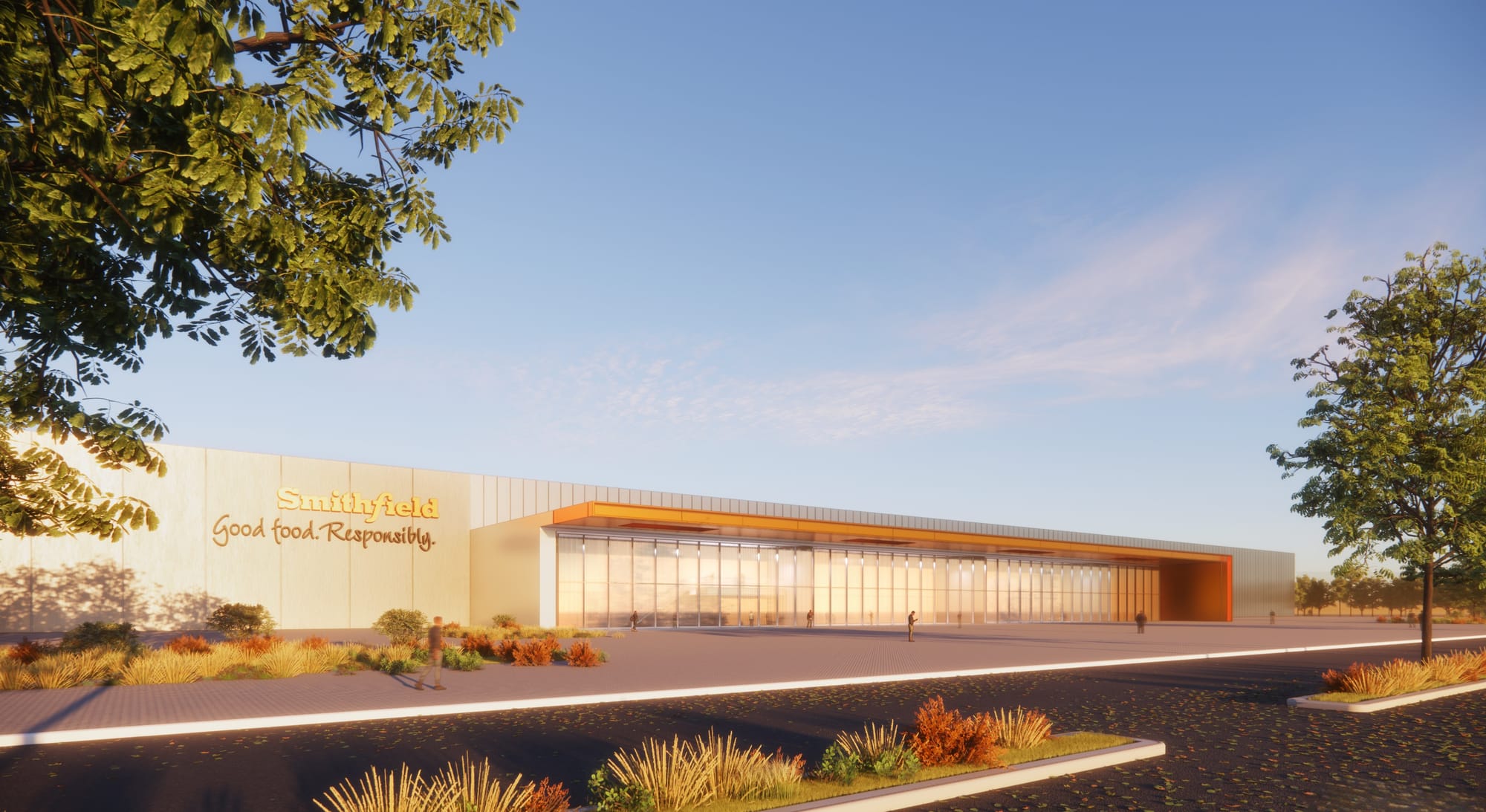
The proposed TIF for Smithfield is expected to be used to reimburse expenses associated with the company's new wastewater treatment facility, which will be used to treat wastewater and keep it from going into the city's existing infrastructure.
- Powers told the Minnehaha County Commission Tuesday morning that the total cost of the wastewater treatment component of Smithfield's new plant is estimated at $150 million. The TIF would reimburse for up to $90 million.
- For context, the total construction of the proposed more 1.1 million-square-foot plant is estimated at $1.3 billion. So it's just shy of 10% of the total cost that'll be covered by those "increment" taxes.
How long will the 'increment' taxes go back to Smithfield?
Twenty years, or sooner if they hit $90 million before that.
Is the TIF a done deal?
Not yet. It'll go to the Planning Commission next week, and then it'll have to get the green light from the City Council.
Isn't there already a TIF at Foundation Park?
Yes! Good memory.
The city approved the largest-ever TIF district in Foundation Park a couple years back – a $94 million TIF to help get the industrial park ready to attract businesses like Amazon and CJ Schwan's.
The proposed Smithfield TIF is adjacent to the Foundation Park one, but there is no overlap.
What happens next?
The TIF is expected to go in front of the Planning Commission on Wednesday, March 4.
If approved, it'll move to the City Council. The first reading is expected to take place March 10 with a second reading and final vote to take place March 17.