Simplified: Hundreds of ballots that were cast in the mayoral election were not counted. Most of those were received too late in the absentee process, but there were a slew of other reasons why a voter's ballot might go uncounted. Here's what we learned in the recount process and how you as a voter can be more vigilant moving forward to make sure your vote counts.
Why it matters
- Voting is, famously, important. It's one of the most direct ways you can influence who leads our community, and it's a keystone of the democratic process. So, yeah, it matters.
- This year's tight mayoral race has shown many cracks in the election system where a voter's ballot can go uncounted – even with the best intentions on all sides.
- For example, 29 ballots cast on election day were thrown out because they were unstamped – meaning a precinct worker neglected to stamp the ballot before handing it to the voter. In an election where four votes wins it, those votes could've changed the outcome.
Why would a vote not be counted?
There's a number of reasons a ballot might not be counted on election day, and a handful of reasons why it might've been counted on election day but not counted in the recount.
Let's start with the big one: Absentee ballots.
There were 153 absentee ballots received after the June 23 run-off. None of them were counted. Of those, 20 were received June 24, which means it's possible, if not likely, they were sent before election day and just didn't arrive on time.
- State law requires that absentee ballots be received at the county auditor's office by 7 p.m. on election day. It's been that way for a long time.
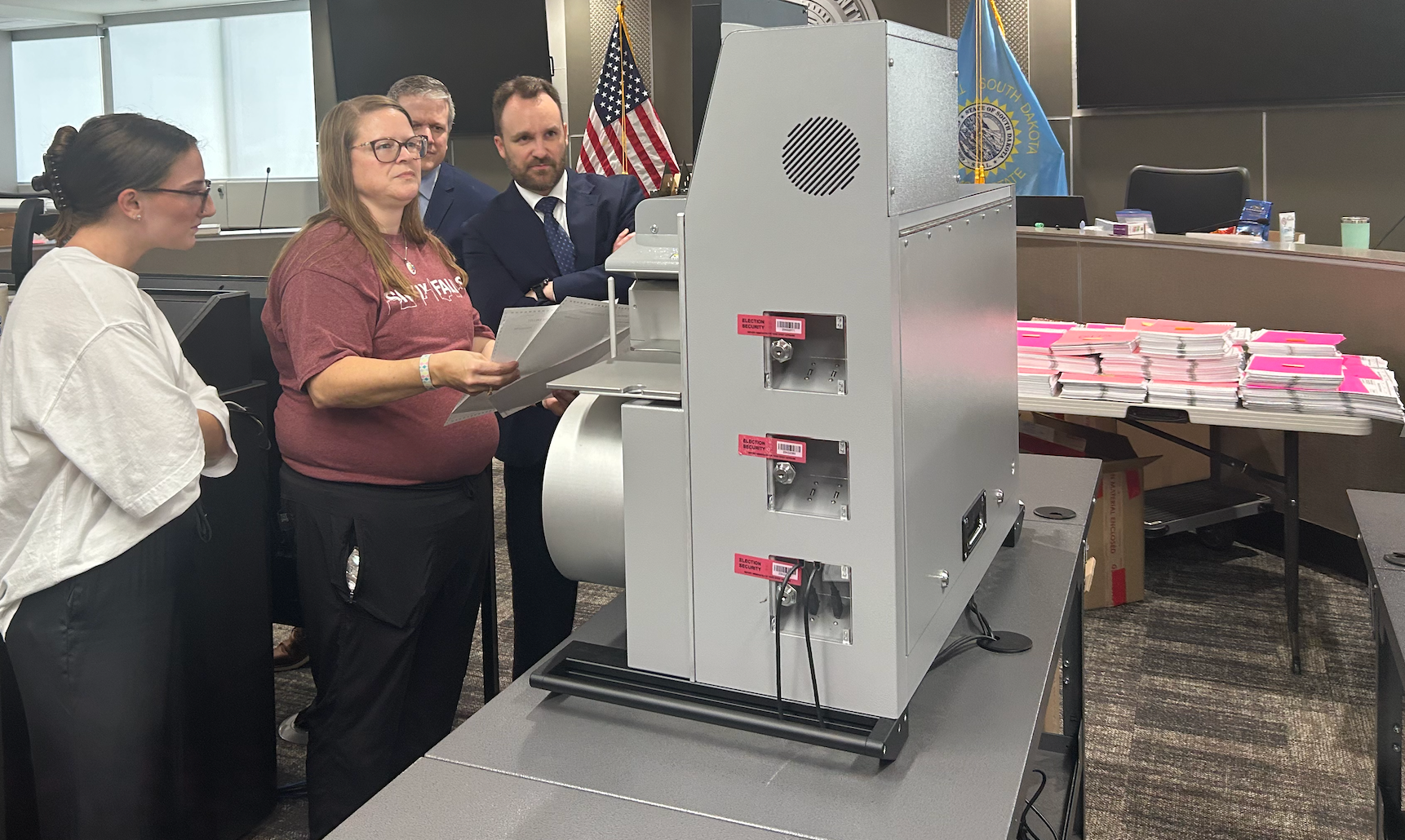
The recount board did not open those ballots because, due to state law, there was no scenario where they could be counted.
It's also worth noting that County Auditor Leah Anderson has stated previously that the ballots were mailed on June 16, the date by which they were required by state law to sent out.
- Anecdotally, voters have told Sioux Falls Simplified they didn't receive their ballots until Saturday.
Ballots without stamps cannot be counted
As indicated above, 29 ballots were rejected because the ballots weren't stamped.
- Here's how the process is supposed to work:
- A voter walks in to a precinct, shows their ID to the poll worker, who then matches their ID with their name on the voter registration list, verifies the voter is in the right precinct.
- Then – and this is the critical part – the poll worker stamps the ballot with the stamp that matches the precinct for the voter. The voter fills out the ballot and drops it in the box.
If your ballot isn't stamped, it cannot be counted. It's also possible it could be thrown out if the stamp doesn't match the precinct in which you're registered.
How you fill in the bubble matters
A few ballots this week were thrown out because of the way the voters marked them.
- State law, as cited by recount board members, requires the mark on the ballot to be both inside the oval and touching the oval itself.
- One ballot during the recount process was rejected because the voter marked a tiny "x" inside the bubble, but the board determined – after literally pulling out a magnifying sheet to get a closer look – that the "x" didn't intersect with the oval itself.
- Another ballot was thrown out because the person didn't fill in the bubble at all, but rather made a mark next to the candidate's name.
Ballots with extra markings can be thrown out
A handful of votes in the mayoral race were designated as "overvotes," meaning voters filled in both bubbles. Those ballots are also thrown out.
- An overvote can also still be considered an overvote even if the voter clearly crossed out one of the names.
The lesson? If you accidentally fill out the wrong bubble while voting, request a new ballot.
Voters given the wrong ballot can have their ballot thrown out
Ballots can also be thrown out if the voter fills out the ballot for the wrong precinct (i.e. for a precinct they don't live in.)
Three ballots were thrown out on election day for this reason, and the recount board ultimately reconsidered and decided to count them.
- In these instances, absentee voters were sent the incorrect ballot, and the recount board ruled that their vote should still be counted because it wasn't their fault, and also the ballots were virtually identical in both precincts.
Absentee ballots with mismatched signatures can be thrown out
Absentee voters are required to have a signature on both their application for an absentee ballot and on the envelope in which they send their ballot.
- If those signatures don't match, their ballot can be thrown out.
During the recount, Jamie Smith's legal team reached out between the first and second day to one voter whose signature was ruled not to match, got a signed, notarized document stating it was her vote.
- The recount board voted not to count that ballot, citing it wasn't an "evidentiary proceeding" and that it wasn't appropriate to present that evidence.
- Justin Smith, attorney representing Erickson on the recount board, said for the record that he has "serious concerns" that reaching out to that voter violated state law.
Emma Olson Sharkey, a member of Jamie Smith's legal team, said, "Just to be clear, a voter is asking you to count their vote, and you're saying, 'no.'"
- Justin Smith responded by saying he "resents the implication that somehow we are telling a voter her vote isn't going to be counted."
State's Attorney Dan Haggar offered no comment on the situation.
What happens next?
It's unclear if Jamie Smith's team will pursue any legal action.
For voters, though, this election serves as a reminder of ways individuals can take a few extra steps – verifying stamps, verifying that you have the correct ballot for your precinct, filling in the bubble correctly – to make their vote as likely as possible to be counted.