
Simplified: It's historic any way you slice it. In an election with more than 36,000 votes, only two separated the two mayoral candidates, Christine Erickson and Jamie Smith, Tuesday night. So, we don't yet know who will be Sioux Falls' next mayor, but here's what we do know about the process moving forward.
Why it matters
- Listen, I think we can skip this part, right? The mayor is a big deal, so it really matters who holds that seat.
OK, on to the Q&A.
How long will the recount take? What does that process look like?
The recount itself shouldn't take more than a few hours, probably – no different than waiting for results on election night. But it's the preparing for the recount that takes time.
First, the City Council had to canvass the election results, which happened Friday morning. This essentially means the council is acknowledging the results that came in and saying, "OK, yep, these are the results."
Next, the candidates have to file for a recount. It's possible that's already happened as of publication time, but the candidates have a total of five days to make this request.
Then, a recount board has to be appointed. Each candidate gets to pick someone to represent them on the recount board (typically an attorney), and then the candidates agree on a neutral third party to round it out. The candidates and city have 10 days to solidify the recount board.
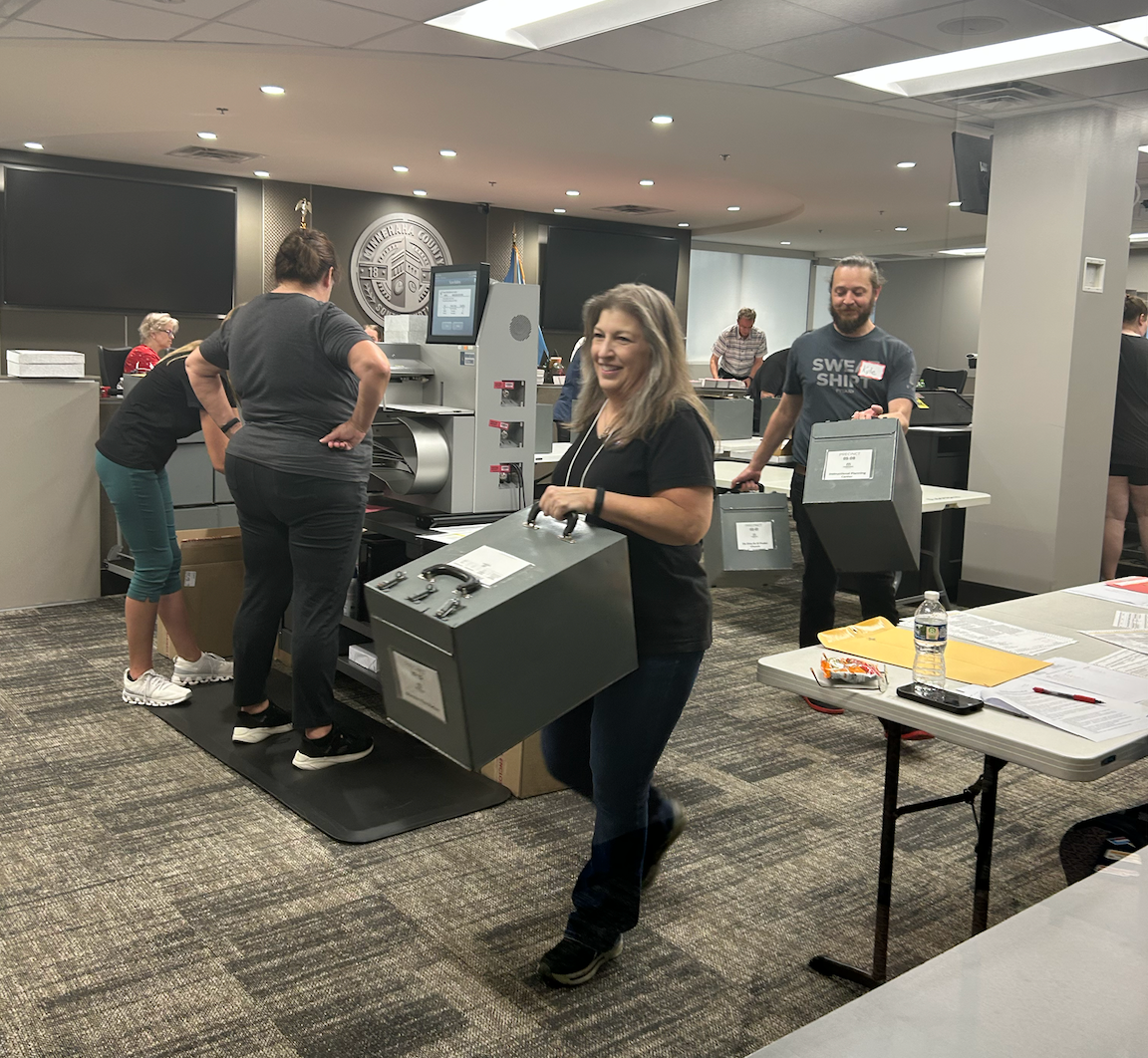
Then, they recount the ballots. The recount board can then take into account ballots that were previously thrown out and assess if they're able to be counted. They'll also re-run the ballots that were counted Tuesday night and, ultimately, determine the results.
If the end result is different than the initial count, a new certificate of election would be issued to the mayoral candidate who is declared the winner.
What if it ends in a tie?
By state law, if an election ends in a tie, it's determined by drawing lots.
It's happened before. In 2021, the Baltic mayor's race was determined by the person who drew the highest card from a deck of playing cards.
I heard some precincts ran out of ballots on election day. What do we know about that?
City Attorney Dave Pfeifle said the city printed over 100,000 ballots for the election, which is more than double the amount required by state law.
"Certain polling places experienced greater turnout than anticipated and then the city delivered additional ballots as promptly as possible," Pfeifle told Sioux Falls Simplified via email. "While ballot deliveries were in route, the voters were told to wait until the ballots arrived."
It's unclear if any (or how many) voters opted to leave instead of wait for a ballot to be delivered. If you know of an instance of this, please reach out to me at megan@sfsimplified.com
What do we know about absentee ballots? Why were they sent out so late?
Pfeifle deferred absentee questions to County Auditor Leah Anderson, who said the challenge was the tight window to get the run-off election completed under state law.
"We mailed the ballots the day we were supposed to, on the 16th," she said. "We understand that doesn't give time. We still have to mail them out."
Changing the timeline to give more than three weeks to complete a city run-off election would require a change in state law.
If no one gets a true 50% of the vote, is there a scenario where this has to go to a third election?
No.
Both city ordinance and state law stipulate that the run-off candidate who receives the "highest number of votes" is elected. S0, if after the recount the numbers remain as they stand now, Christine Erickson will be the next mayor.
I heard some ballots got thrown out. Why did that happen?
There are a few different ways a ballot would not be able to be counted, Anderson said.
First, if a ballot is not stamped by a precinct worker, it cannot be counted. This did come up several times on Tuesday night, though Anderson didn't have a specific number of ballots that were thrown out for that reason.
"That's unfortunate because we tell our workers they have to make sure the ballots are stamped," Anderson said. "They're taking away the persons vote. There's nothing we can do if it comes to us in the ballot box if it's not stamped."
Secondly, there's the case of provisional ballots. This election had five provisional ballots, which means the person who voted didn't have ID at the polls. Those ballots then have to be checked out to make sure the voter was actually eligible to vote.
- Of the five provisional ballots cast, only two could be counted, Anderson said. The remaining three were ineligible – one voter wasn't registered, and the other two didn't live within city limits.
What about Paul?
Mayor Paul TenHaken has to stay in office until this is all settled. On a social media video earlier this week, he likened his situation to telling a high school senior he has to stay in school until the fall instead of graduating in the spring.
We're all thinking about you Paul – hope you get a vacation and a good therapist after all of this.