
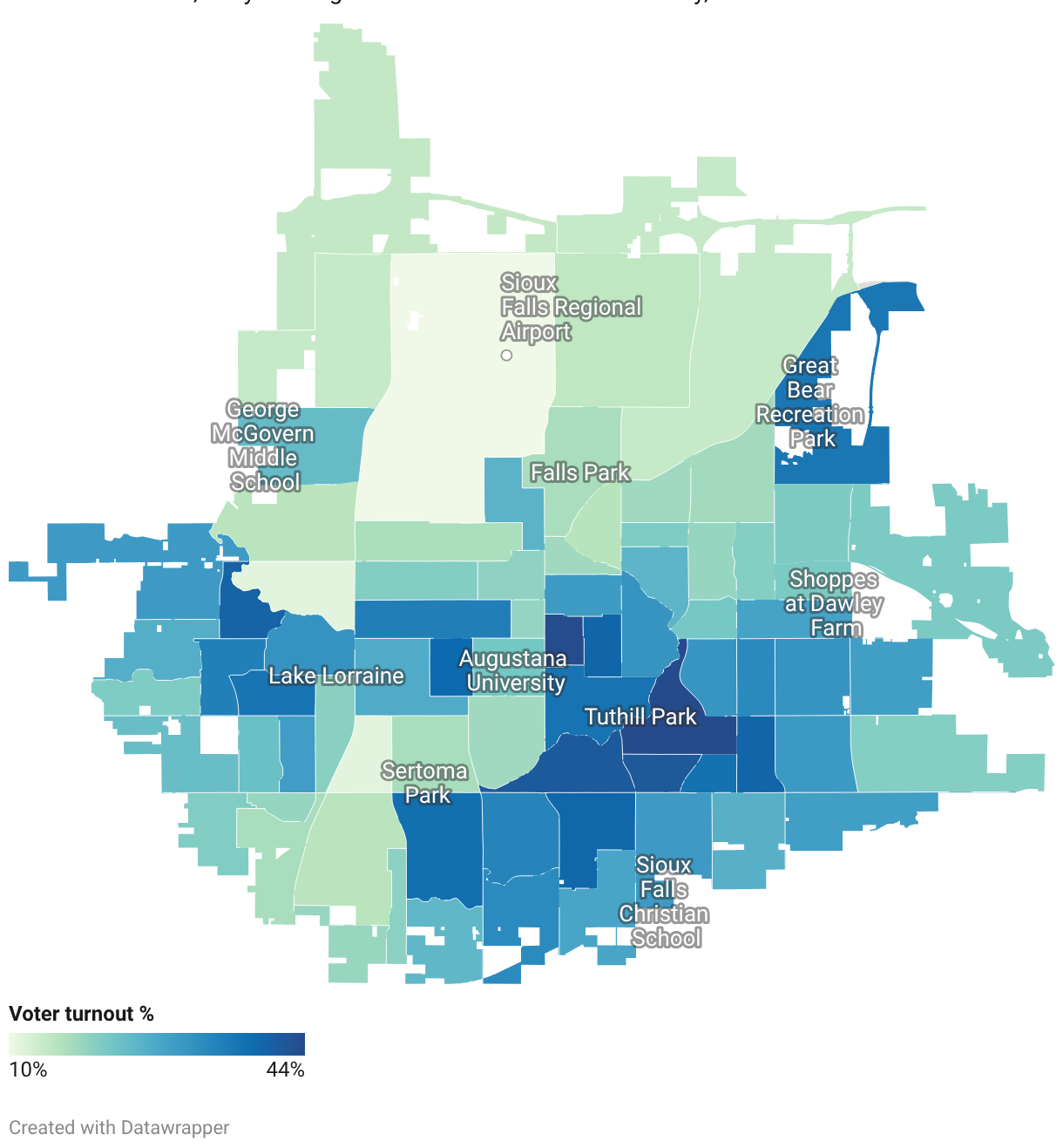
Simplified: Only about 1 in 4 registered voters in Sioux Falls cast a ballot in Tuesday's mayoral election, and not one single precinct in the city saw higher turnout in the run-off than it did in the primary election on June 2. Here's a closer look at where folks turned out the most.
Why it matters
- The 24% voter turnout shows that the majority of Sioux Falls' registered voters opted not to weigh in on who leads the city for the next four years. Below you'll find a heat map showing where in town voter turnout was the highest.
- This continues a trend Sioux Falls Simplified analyzed four years ago in which as the city's population grows, its voter turnout shrinks. The last time the city elected a mayor in a run-off election in 2018 (when Paul TenHaken first took office), voter turnout was 31%.
- It's always important to vote, obviously, but the importance is never so striking as when there's a two vote difference between the two candidates. That means if you cast a ballot Tuesday, your vote could've been the deciding vote.
Show me the map
And, as a point of comparison, here's a link to the map showing turnout in the June 2 election.
Map: How many people in your neighborhood turned out to vote?
Across the state, about 1 in 3 registered voters cast a ballot on Tuesday. On the whole, that’s about how things shook out in Sioux Falls, but a closer look at precinct-level data shows some neighborhoods were more likely to turn out and vote than others.
 Megan Raposa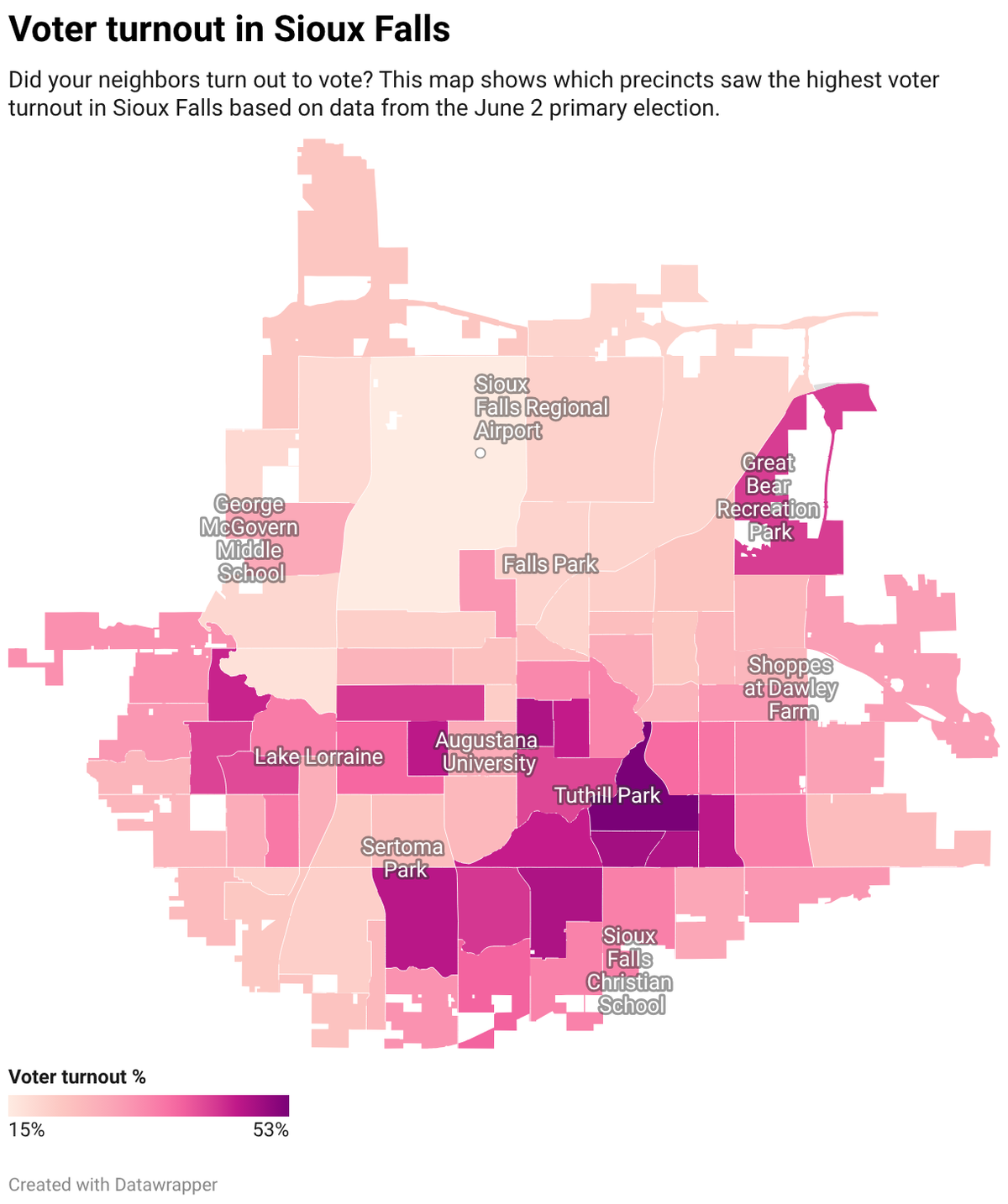
Sioux Falls Simplified analysis found that every single precinct in town saw lower turnout in the run-off.
- The precinct with the steepest drop in turnout was Precinct-0301, in west-central Sioux Falls (polling place: Asbury United Methodist Church), that saw an 11-point drop in voter turnout – from about 38% in the June 2 primary to about 27% in the run-off.
What happens next?
I don't know, man. Maybe vote next time, so I don't have to write such depressing turnout stories.